
The Way Forward for Pre-Trial Detention: Alternatives in Response to a Global Crisis
In 2020, during the height of the COVID-19 pandemic, Amanda Lacaba Echanis, activist for peasant women in the Philippines, was arrested and detained in pre-trial detention. Her home was searched, her family was separated from her, and she was left with her newborn baby, charged with offences for which pre-trial detention was mandatory in the Philippines. She spent over 5 years in detention, before her case was dismissed due to procedural violations indicative of fabricated charges and planted evidence. Amanda’s first-hand account of lived experience with pre-trial detention, characterised by significant delays in hearings, overcrowding and other substandard prison conditions, is not an isolated one, her experience is shared not only with other activists in the Philippines, but many of those detained awaiting trial globally.
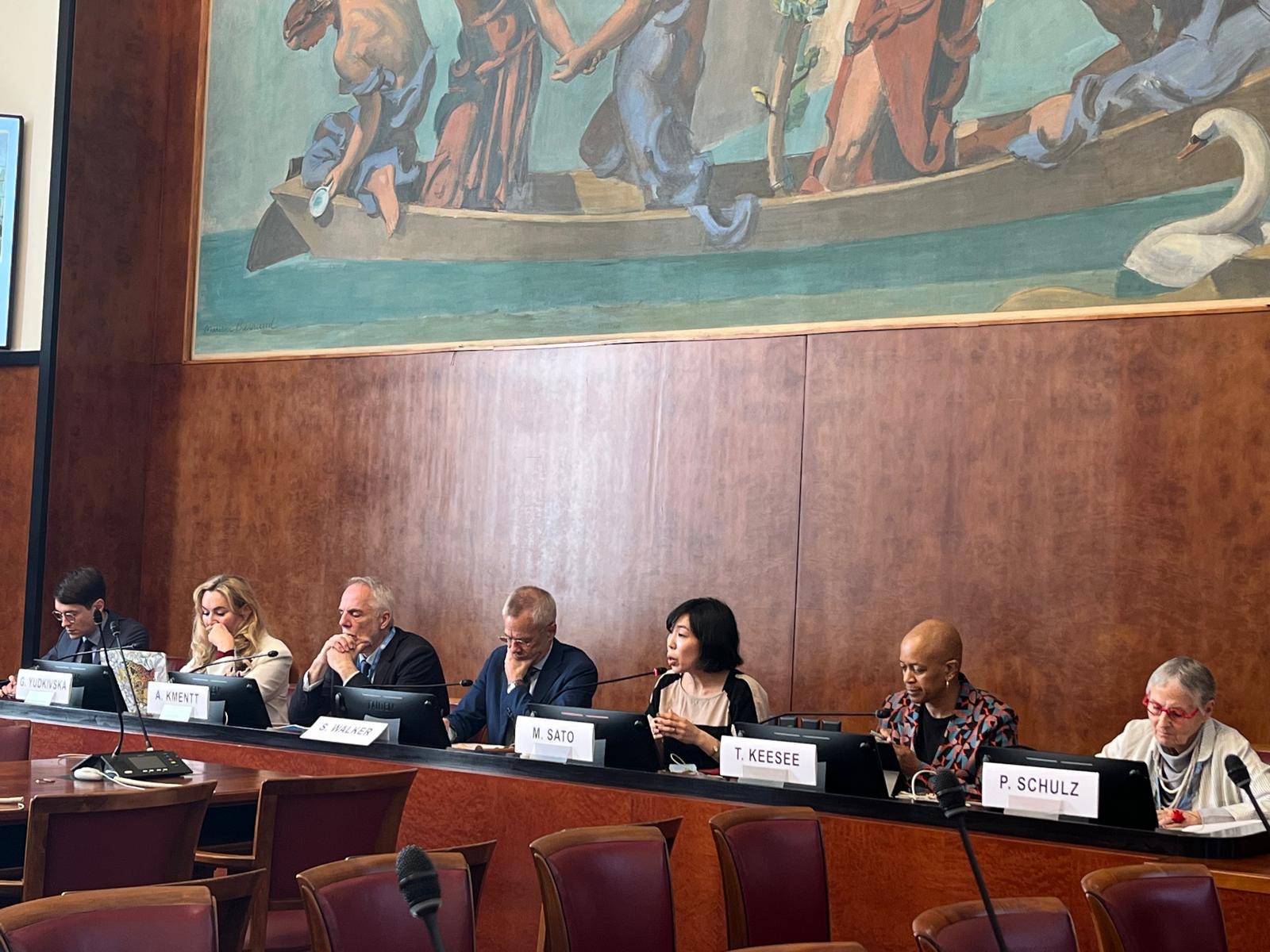
On 23 March 2026, at the margin of the 61st Session of the UN Human Rights Council in Geneva, ICPR and the Office of the United Nations High Commissioner for Human Rights held a side event on the topic of Human Rights Compliant Alternative Measures to Pre-Trial Detention, to address this growing crisis. The side event was moderated by Simon Walker, Chief of the Rule of Law and Democracy Section of the OHCHR, who gave welcome remarks drawing attention to key issues with the global use of pre-trial detention and the UN position on these issues. In a brief overview, he stated that the substantial growth in pre-trial detention since 2000 was a disproportionate response, not related to risk or efficiency, that reflected failures to utilise such measures as a last resort and/or facilitate the use of alternatives. In summarising the UN position, he pointed to Sustainable Development Goal 16, which entails considering the percentage of pre-trial detainees in the total prison population as an indicator of the efficiency and accessibility of criminal justice systems, and the commitment within the 2021 UN Common Position on Incarceration to work towards reform of pre-trial detention. He preceded other speakers at the side event, joining in endorsing reforms such as narrowing mandatory pre-trial detention provisions and increasing access to legal aid and bail.
In opening the side event, Alexander Kmentt, Permanent Representative of Austria to the UN offices in Geneva, pointed out its close proximity to the release of the 5th edition of the World Prison Brief's World Pre-trial/Remand Imprisonment List, which estimated over 3 million people currently being held in pre-trial detention globally, which, read in conjunction with the UN System Common Position on Incarceration, presents pre-trial detention as an issue on the forefront of criminal justice reform discussions. Further, he stated the importance of approaching the issue of pre-trial detention from a human rights perspective, which naturally led to exploration of alternatives.
Following this, ICPR Director Professor Mai Sato gave a keynote address, expanding on the findings of the above-mentioned latest edition of the World Pre-trial/Remand Imprisonment List and ICPR's adjacent research on pre-trial detention. She clarified the previously mentioned estimate of 3 million pre-trial detainees as excluding jurisdictions, such as China, from which official data is unavailable and those held in police cells as opposed to prisons. Along with the sheer number of pre-trial detainees, she expressed concern about the number of countries in which the majority of prisoners are pre-trial detainees, suggesting a lack of alternatives to pre-trial detention. This was compounded by the conditions of pre-trial detention, marked by overcrowding, a lack of resources and facilities for long-term detainees and systemic inefficiencies leading many to spend more time in detention than would be imposed if they were convicted and sentenced. Consequences not only impact the lives of detainees financially and socially, but also mentally, leading to high suicide rates in pre-trial detention in comparison to the already high rates in general prison populations. Additionally, pre-empting discussion from panellists, she pointed to ICPR's findings on the specific and exacerbated impact of pre-trial detention on marginalised groups, women and those detained for drug-related offences as key concerns in assessing strategies to curb the growth in pre-trial detention.
Following this, she provided examples of successful reductions in the use of pre-trial detention to show a way forward for reform, with commonalities found in investment in legal aid, legislating for alternatives, ensuring judiciaries and practitioners are kept informed of said alternatives and improving capacity for and resourcing of community supervision and related alternatives. In addition, she appealed to countries to more consistently record and report data in relation to the use of pre-trial detention and to the UN Human Rights Council to take a more active role in addressing these issues and the issues further explored by the panel.
The first panellist, Dr. Ganna Yudkivska, chair of the UN Working Group on Arbitrary Detention, spoke about the findings reported by the Working Group regarding alternatives to pre-trial detention in their last annual report. Echoing other speakers, she emphasised the importance of pre-trial detention being used as a last resort, as well as mitigating the heavy impact of pre-trial detention’s overuse on marginalised groups and the contribution of pre-trial detainees to overcrowding. She paid particular attention to distinguishing financial and non-financial alternatives to pre-trial detention. Typical alternatives to pre-trial detention, such as bail, are key measures to be relied on in decreasing the use of pre-trial detention, but can be unobtainable for many where financial conditions bar access. She recommended that non-financial alternatives become predominant in more jurisdictions, and that conditions should generally be more catered to individual circumstances, so as to not become impossible to meet, leading to pre-trial detention under a different façade.
Reinforcing the conclusions of the keynote, Dr. Yudkivska argued that achieving a reduction in the use of pre-trial detention in favour of non-custodial alternatives requires both legislative changes and significant investment in infrastructure necessary for community-based alternatives, as well as ensuring access to justice for vulnerable populations.
Dr. Tracie Keesee, a Member of the UN International Expert Mechanism to Advance Racial Justice and Equality in Law Enforcement, spoke about racial discrimination against Africans and those of African descent in criminal justice as canvassed in the Mechanism's previous annual report, with specific focus on how pre-trial detention is both overused and particularly impactful on this racialised group. Discrimination against Africans and those of African descent reaches 'all the layers of the criminal justice system' which includes over-policing and overuse of pre-trial detention based on racialised assumptions. Dr. Keesee made clear the intersectionality of this discrimination, with gender, age, mental health status and migration status being underlined as potential factors exacerbating the impact of systemic racism in criminal justice. From this, the importance of lived experience with criminal justice was again made apparent, and Dr. Keesee made a call to ensure sentencing law is drafted and implemented with the lived experience of marginalised communities interacting with criminal justice systems in mind.
Dr. Keesee also brought forward access to justice as an issue of particular focus, given that marginalised groups are significantly impacted by poor access to representation and timely hearings, as well a lack of diversity among those administering criminal justice. This has led to procedural fairness being a concern for groups disproportionately represented in pre-trial detention, especially apparent in the excessive use of pre-trial detention for drug offences. Dr. Keesee endorsed addressing these shortcomings, alongside implementation of alternatives to pre-trial detention such as supervised release, community-based monitoring and restorative justice measures.
ICJ commissioner Patricia Schulz focused on the growing issue of the incarceration of women over the past two decades. She argued this growth has occurred without an increase in women committing dangerous offences, but an increase in the targeting of vulnerable women for 'low-level' offences, and in the severity of punishment imposed on these women. She highlighted offences such as abortion, sex work, same-sex relations and adultery as 'women's-only crimes', and ‘survival-driven’ offences linked to disadvantage such as shoplifting and drug offences. She subsequently drew attention to the ICJ 8 March Principles for a Human-Rights Based Approach to Criminal Law Proscribing Conduct Associated with Sex, Reproduction, Drug Use, HIV, Homelessness and Poverty from 2023, which recommended such acts, ie those not concerning 'substantial harm to the fundamental rights and freedoms of others or to certain fundamental public interests', be decriminalised.
She then discussed excessive periods of imprisonment without trial, outside contact or proper healthcare, and reinforcing the lived experience recounted earlier by emphasising the heavy impact such measures have on women. Further, she discussed pervasive issues of overcrowding, poor staffing, limited access to services (eg work, education, recreation and healthcare) and violence. As attested by other speakers, she stated that these issues are of concern to pre-trial detainees especially, given the additional burden imposed by a lack of access to representation and/or bail, often for financial reasons.
Khalid Tinasti, Member of the UN Independent Review Panel on the International Drug Control System focused on drug policy, as drug offences are the 'largest driver of pre-trial detention globally'. Drug offences constitute a large share of people's interactions with criminal justice systems, but there is a distinct imbalance between those arrested for such offences and those convicted, as those not convicted often spend excessive periods in pre-trial detention.
Following previous panellists, he argued the use of pre-trial detention for drug offences heavily impacts women, and echoed the sentiment that women are often detained for low-level offending, in circumstances of marginalisation and disadvantage. He further raised the use of compulsory pre-trial drug treatment in several jurisdictions, predominantly in East and Southeast Asia, as an overlooked issue. Such treatment centres utilise detention alongside conditions in breach of human rights standards, and have thus been called to close and be replaced with voluntary, evidence-based treatment. Regardless, he argued that as long these facilities remain in use, they are a necessary part of pre-trial detention discussions.
In closing Gustavo Gallón Giraldo, Permanent Representative of Colombia to the UN offices in Geneva described alternatives to pre-trial detention as requiring states to make 'a shift in perspective', and advocated more close adherence to human rights standards such as the Mandela Rules and the Bangkok Rules to ensure the myriad issues outlined by the panellists were sufficiently addressed.
The side event demonstrated the presence of significant overlap in prospective outcomes in the global use of pre-trial detention, with speakers and panellists aligning in recommending legislative reform, investment in infrastructure for community supervision and legal aid and for particular attention to be paid to vulnerable, marginalised groups in pre-trial detention. In conjunction with ICPR’s continued research and reporting on the use of pre-trial detention and paths to alternatives, the side event indicated a way forward to reducing the overuse of pre-trial detention, while also reinforcing the immediacy of this issue.